Views: 0 Author: Site Editor Publish Time: 2026-04-29 Origin: Site
How much downtime can a single failed component cause on a rig? Within a top drive, the Compression Spring serves as the silent backbone for all Top Drive Structural Parts. This article explores how these springs manage extreme vibration to prevent structural fatigue and costly mechanical failures.
● Vibration Neutralization: The Compression Spring acts as a critical shock absorber, mitigating "bit bounce" and protecting sensitive Top Drive Structural Parts from mechanical fatigue.
● Load Distribution: These components ensure dynamic load balancing across thrust bearings and main shafts, extending the service life of the entire drive assembly.
● Material Integrity: High-performance springs utilize alloy steel and advanced coatings like shot peening to resist corrosion and stress cracking in harsh drilling environments.
● Operational Efficiency: Proper spring tension facilitates smoother pipe handling and link tilting, reducing cycle times and preventing unplanned maintenance.
● Maintenance Standards: Regular inspection of "free length" and proper lubrication are essential protocols to ensure Top Drive Structural Parts remain aligned and functional.
The mechanical integrity of a top drive depends on how well it manages physical forces. A Compression Spring is not merely a flexible wire; it is a precision-engineered component designed to handle several critical tasks simultaneously.
● Dynamic Load Balancing: These springs distribute heavy weights evenly across the main shaft and thrust bearings. Without this balance, localized pressure would cause premature bearing failure.
● Shock and Vibration Dampening: Drilling often results in "bit bounce." Top Drive Structural Parts utilize springs to neutralize these upward shocks, protecting sensitive internal electronics and gear sets.
● Preloading Mechanisms: They ensure constant contact between mating surfaces. This eliminated mechanical backlash, which is essential for maintaining torque accuracy.
● Energy Storage and Release: During heavy-duty operations, springs manage sudden axial force spikes by absorbing energy and releasing it controlledly.
● Thermal Expansion Compensation: As friction generates heat, metal parts expand. Springs adjust their tension to accommodate these microscopic shifts without losing structural grip.
● Safety Fail-safes: In many designs, they support secondary braking or locking systems, providing the mechanical force needed to engage safety stops if power fails.
● Alignment Retention: They help keep internal components concentric. Under extreme rotational stress, even a slight deviation can lead to structural grinding.
Function | Impact on Top Drive Structural Parts | Technical Benefit |
Load Balancing | Reduces bearing wear | Extends maintenance intervals |
Dampening | Absorbs bit bounce shock | Protects gear teeth integrity |
Preloading | Eliminates backlash | Improves torque precision |
Alignment | Maintains concentricity | Prevents eccentric shaft wear |
Note:A common cause of top drive vibration issues is often traced back to a single fatigued spring within the structural housing.
Choosing the right material is a balancing act between strength and environmental resistance. Since Top Drive Structural Parts operate in harsh conditions, the spring material must be top-tier.
Alloy steel, such as Chrome Silicon, is the industry standard for high-stress applications due to its incredible tensile strength. However, in offshore or sour gas environments, stainless steel or even exotic alloys like Inconel might be necessary to fight corrosion. Fatigue resistance is the most critical metric; high-tensile wire ensures the spring doesn't take a "permanent set" or lose its height after millions of cycles.
Surface treatments also play a role. Shot peening—a process that hammers the surface with small spheres—introduces compressive residual stress. This significantly boosts the fatigue life of the Compression Spring. Additionally, zinc plating or specialized polymer coatings reduce friction when the spring compresses within its structural pocket.
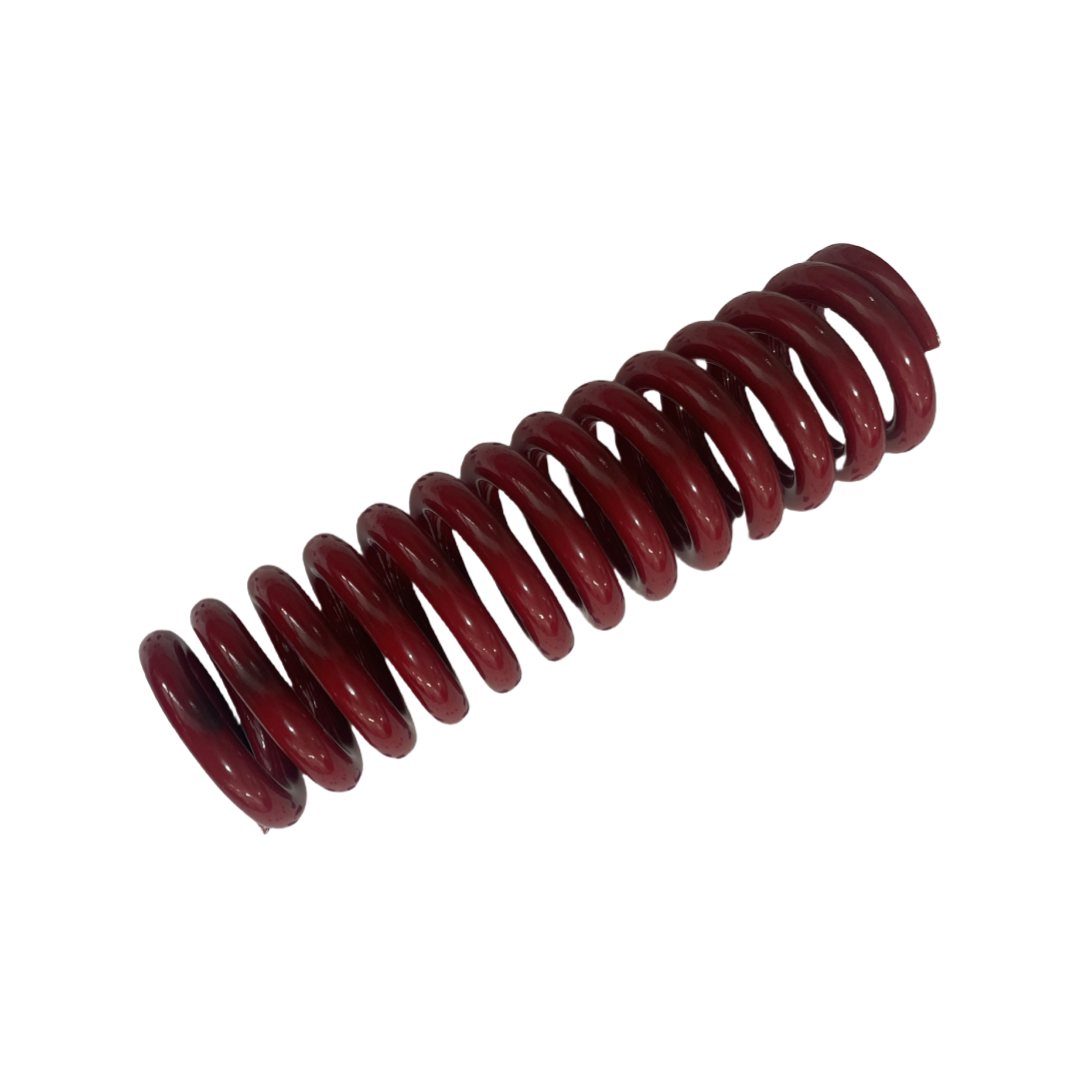
The pipe handling assembly is where the Compression Spring shows its versatility. This system must be responsive and agile to minimize "flat time" during connections.
Spring-Assisted Link Tilting: These springs enhance the responsiveness of the link tilt mechanism. They provide the "return force" that brings the elevator links back to a neutral position quickly and safely. This prevents the links from swinging uncontrollably, which could damage other Top Drive Structural Parts.
Automated Pipe Gripping: In automated systems, springs provide the consistent tension required for secure drill pipe handling. They act as a mechanical backup to hydraulic cylinders, ensuring that even if hydraulic pressure fluctuates, the grip remains firm. This shielding of structural joints from sudden vertical shocks during tripping operations is vital for rig safety.
Note:Regularly inspect the link tilt springs for signs of "set" (loss of length), as this can lead to sluggish pipe handling and increased cycle times.
The most demanding job for a Compression Spring in Top Drive Structural Parts is managing axial loads. Think of the spring as a cushion between the massive weight of the drill string and the precision gears of the top drive.
Technical math defines this through load deflection curves. Engineers calculate the specific "spring rate" (k) required to support the load without reaching "solid height." If the spring rate is too low, the bit bounce will hammer the drive motor. If it is too high, the system becomes too rigid, transferring all vibrations directly into the main bearings.
F = k·x
Where F is the force, k is the spring constant, and x is the displacement. By fine-tuning this constant, manufacturers protect the drive motor from axial kickbacks and harmonic vibrations that could otherwise shatter gear teeth.
Designing a Compression Spring for Top Drive Structural Parts requires accounting for several failure modes.
One major risk is coil binding. If a spring is compressed to its maximum (solid) height, it loses all dampening capability and acts as a solid piece of steel, transferring 100% of the shock to the top drive. Designers must ensure the operating range stays well within the elastic limit.
Environmental Stress Cracking (ESC) is another concern. If drilling fluids or chemicals leak into the spring housing, they can cause microscopic cracks. Over time, these cracks expand under the constant cycling of the top drive, leading to sudden failure. Stress relaxation—the gradual loss of tension—can also occur over years of service, subtly throwing the structural alignment out of spec.
Note:Hydrogen embrittlement is a hidden danger for high-strength springs in sour gas wells; ensure your springs are baked post-plating to remove trapped hydrogen.
While some modern systems experiment with hydraulic dampers or air springs, the mechanical Compression Spring remains the gold standard for Top Drive Structural Parts.
Hydraulic systems are complex. They require seals, fluid reservoirs, and constant pressure monitoring. A leak in a seal can lead to an immediate loss of dampening. In contrast, a coil spring is a "set and forget" component. It doesn't leak, it doesn't require power, and its failure mode is usually gradual rather than catastrophic.
From a cost-benefit perspective, high-grade spring steel offers a much higher ROI. The initial investment is lower, and the maintenance is significantly simpler. While a hydraulic repair might require a specialist and hours of cleaning, a spring replacement is a straightforward mechanical task.
Feature | Compression Spring | Hydraulic Damper |
Complexity | Low (Single part) | High (Multiple valves/seals) |
Reliability | Extremely High | Moderate (Risk of leaks) |
Maintenance | Visual Inspection | Fluid/Seal changes |
Power Needs | None (Passive) | Requires Pressure |
Effective maintenance of Top Drive Structural Parts keeps the rig turning. For springs, this starts with visual inspection protocols. Maintenance crews should look for pitting, rust, or uneven spacing between coils.
Measurement is the only way to confirm a spring's health. By measuring the "free length" (the height of the spring when not under load), technicians can determine if the metal has fatigued. If the free length has decreased by more than a specified percentage (usually 3-5%), the Compression Spring must be replaced.
Lubrication is often overlooked. While the spring doesn't "rotate," the coils rub against the housing or guide rod during compression. Applying a high-pressure, water-resistant grease reduces this internal friction and prevents heat buildup, further extending the life of the component.
Note: Create a "Spring Replacement Kit" for your top drive's scheduled 5-year overhaul to ensure all structural springs are swapped out simultaneously, preventing uneven wear.
The Compression Spring is an indispensable component within Top Drive Structural Parts, managing loads and absorbing shocks under brutal conditions. High-quality materials and rigorous maintenance significantly improve uptime while protecting primary assets. JJC TEC provides premium structural components designed to withstand extreme drilling environments. Their precision-engineered solutions ensure long-term system integrity and peak operational efficiency for modern rigs.
A: It dampens intense vibrations and manages axial loads to prevent structural fatigue.
A: By providing a mechanical cushion that neutralizes bit bounce and protects internal gears.
A: High-tensile alloy steel is preferred for its superior resistance to fatigue and corrosion.
A: Replace them if the free length reduces by over 3% to maintain proper tension.


