Views: 0 Author: Site Editor Publish Time: 2026-04-15 Origin: Site
In the high-stakes world of oil drilling, can a tiny pin save a multi-million dollar Top Drive? While massive motors dominate the rig, total mechanical integrity often hinges on the small, unassuming roll pin. This article explores how these fasteners secure critical connections under extreme torque and stress.
● The Critical Anchor: Though small, the roll pin is the primary mechanical link ensuring Top Drive safety and torque integrity.
● Superior Vibration Resistance: The unique elastic "spring action" allows roll pins to remain seated in high-vibration drilling environments where solid fasteners fail.
● Enhanced Durability: High-carbon steel and coiled designs provide the double-shear strength necessary for high-output Top Drive operations.
● Proactive Maintenance: Regular inspection for "pin creep" and replacement during overhauls significantly reduces costly non-productive time.
A Top Drive functions as a massive rotary machine that must withstand thousands of foot-pounds of torque while suspended high above the rig floor. The roll pin, often referred to as a spring pin, serves as a vital mechanical insurance policy. In many configurations, they act as the primary locking mechanism for internal shafts, gears, and control linkages. Without them, the rotational energy could cause threaded fasteners to back out, leading to mechanical detachment.
The drilling environment is notorious for high-frequency vibration. Unlike solid pins, which can vibrate loose or deform over time, the elastic design of a roll pin allows it to exert constant outward pressure against the walls of the hole. This interference fit makes it naturally resistant to the jarring motions of the drill string. It effectively absorbs energy that would otherwise lead to metal fatigue in rigid connectors.
Furthermore, roll pins are essential for torque distribution and alignment. As the Top Drive motor generates immense rotational force, internal components must remain perfectly synchronized. Roll pins maintain the structural "timing" of these parts, preventing micro-shifts that lead to uneven wear. They also act as safety interlocks; in both manual and automated backup systems, these pins ensure that secondary safety devices engage correctly if the primary systems fail.
Feature | Role in Top Drive System |
Securing Drive String | Prevents gear and shaft migration during rotation. |
Vibration Resistance | Absorbs harmonic energy to prevent fastener loosening. |
Torque Distribution | Ensures even load sharing across mechanical couplings. |
Safety Interlocks | Acts as a fail-safe for secondary retention systems. |
When comparing roll pins to traditional bolts or solid dowels within a Top Drive assembly, the advantages become clear. The defining characteristic of a roll pin is its "spring action." It is manufactured to a diameter slightly larger than the hole it occupies. When compressed during installation, its stored elastic energy creates a permanent tension that keeps it seated despite the constant jarring of drilling operations.
In terms of shear strength, heavy-duty roll pins—especially coiled versions—offer superior performance. They can provide double-shear protection, distributing forces across multiple layers of the pin's body. Standard bolts often fail at the threaded section, which is a natural weak point. A headless roll pin eliminates this risk, providing a smooth, flush profile that is less likely to snag or shear off due to external contact.
Field maintenance teams also prefer them because they simplify the installation process. They do not require precise torqueing or safety wire; they only need a hammer and a punch. This ease of use is critical when performing repairs on a Top Drive that is hanging fifty feet in the air. Furthermore, they are often made from specialized alloys like high-carbon steel or chrome-silicon, which provide the flexibility to absorb sudden shock loads that would snap a brittle, hardened bolt.
Note:Roll pins are specifically designed to be "self-retaining," meaning they do not require nuts or cotter pins to stay in place under high-vibration conditions.
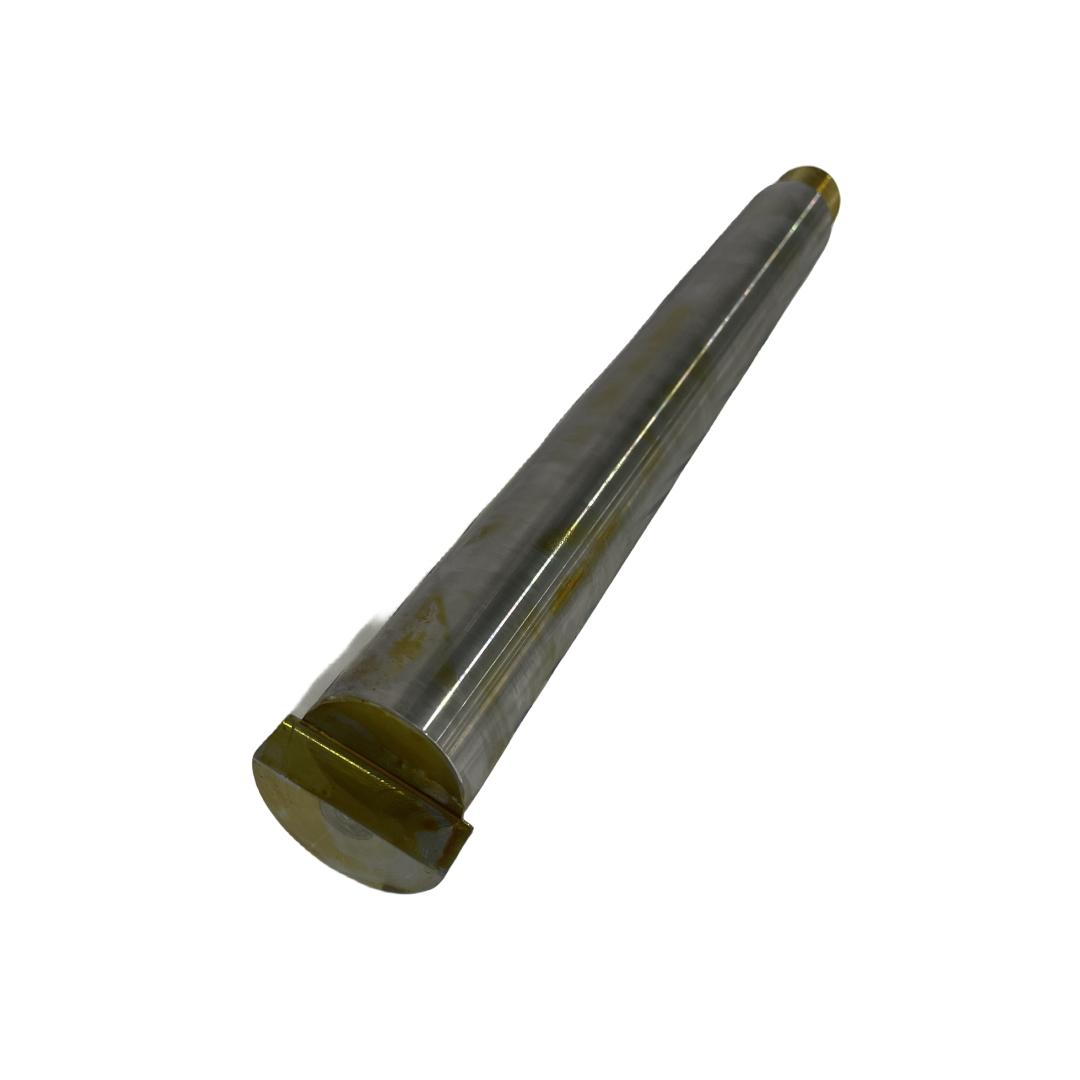
For any drilling contractor, downtime is the enemy of profitability. A failed mechanical connection in the Top Drive can lead to days of non-productive time (NPT). Monitoring the health of roll pins is a low-cost way to prevent high-cost disasters. Technicians should look for "pin creep"—where the pin begins to migrate out of its hole—or visible deformation at the ends of the pin, which indicates excessive shear stress.
Because roll pins are inexpensive and easy to replace, they significantly reduce the Mean Time to Repair (MTTR). During routine inspections, swapping out a worn pin takes minutes but could prevent a multi-million dollar catastrophic failure. It is a classic example of a cost-benefit win: the cost of the pin is negligible compared to the risk of a dropped Top Drive component or a twisted-off shaft.
Best Practices for Maintenance:
● Replace roll pins every time a major component is disassembled.
● Use a dedicated pin punch to avoid mushrooming the head during installation.
● Keep a comprehensive kit of various sizes specifically for your Top Drive model.
● Document every pin replacement in the rig’s maintenance log to track wear patterns.
Note: Implement a "replace on sight" policy during Top Drive overhauls—never reuse a roll pin once it has been removed, as its tension properties degrade after the first use.
Despite their resilience, roll pins are not invincible. Shear failure is the most common issue, usually occurring when the Top Drive encounters sudden resistance or "slugging" while drilling. If the pin is not rated for the specific load, it will eventually fatigue and snap. Recognizing the difference between a clean shear and a gradual fatigue crack can help engineers determine if the system is being over-torqued.
Environmental factors like corrosion and hydrogen embrittlement also play a role, especially in sour gas wells or offshore environments. If saltwater or H2S penetrates the Top Drive housing, standard carbon steel pins can become brittle and fail without warning. Using galvanized or stainless steel variants is often necessary in these conditions.
Improper sizing and installation errors are also frequent culprits. If a pin is too small, it will rattle within the hole, leading to "wallowing" (where the hole itself becomes enlarged). Conversely, using the wrong size punch during installation can cause the pin to collapse or lose its spring tension. Ensuring the hole is clean and within the specified tolerance is essential for a secure Top Drive mechanical bond.
Failure Mode | Root Cause | Prevention Strategy |
Shear Failure | Over-torque or shock loads. | Use higher-grade alloys or coiled pins. |
Corrosion | Saltwater or chemical exposure. | Specify stainless or coated fasteners. |
Pin Creep | Loss of tension or hole walling. | Check hole tolerances during inspection. |
Brittle Fracture | Hydrogen embrittlement. | Use vacuum-degassed steel for pins. |
Not all pins are created equal. In the context of a Top Drive, engineers typically choose between slotted and coiled pins. Slotted pins are standard for light to medium duty, while coiled pins—which look like a rolled-up sheet of metal—are designed for the heaviest loads. Coiled pins distribute stress more evenly throughout their cross-section, making them the preferred choice for critical drive-train connections.
Material grades are equally important. For offshore operations, 420-grade stainless steel is often the minimum requirement to prevent rust. For high-torque applications, 1070 to 1095 high-carbon steel is standard, provided it has been properly heat-treated. The pins must meet specific Rockwell hardness standards to ensure they are tough enough to resist shearing but flexible enough not to shatter.
Precision is the key to performance. A Top Drive roll pin must maintain a precise fit within its housing. Engineers specify these fits down to the thousandth of an inch. If the fit is too loose, the pin will move; if it is too tight, the pin might lose its elasticity during the driving process. Standardizing these specs according to API (American Petroleum Institute) guidelines ensures that parts are interchangeable and reliable across different rig sites.
Note: When ordering replacements for Top Drive service, specify "Heavy Duty" coiled pins rather than "Standard Duty" to ensure a higher margin of safety against shear forces.
Safety is the ultimate priority in the oilfield. The Top Drive hangs directly over the crew, and any falling part is a potential "Dropped Object" fatality. Roll pins act as a secondary retention method for bolts, shackles, and guards. By pinning these components in place, they provide a physical barrier that prevents them from falling even if the primary threads fail.
Furthermore, a reliable Top Drive connection is vital for well control. If the mechanical connection to the drill string fails during a kick, the crew may lose the ability to rotate or circulate, leading to a blowout. While the roll pin is far removed from the Blowout Preventer (BOP), its role in maintaining operational control of the pipe cannot be overstated.
Adhering to API standards for secondary retention is not just a best practice; it is often a legal requirement. These standards mandate the use of pins in specific areas of the Top Drive to ensure that even in the event of a catastrophic motor failure, the equipment remains safely contained. By focusing on these small details, drilling companies demonstrate their commitment to the highest levels of rig safety and environmental protection.
The roll pin is a masterpiece of engineering that ensures essential security for every Top Drive. It acts as a silent guardian for torque and operational safety. At JJC TEC, we provide high-precision fasteners designed to withstand extreme drilling environments. Rigorous inspection and quality sourcing through JJC TEC ensure your connections remain elite and efficient. Trusting these small components is vital for maintaining a safe, high-output drilling operation.
A: It provides elastic tension that resists heavy vibrations, ensuring the Top Drive mechanical connections stay secure and aligned.
A: Coiled pins offer higher shear strength and better stress distribution for critical, high-load Top Drive transmission components.
A: Excessive torque, corrosion, or improper sizing can fatigue the pin, leading to a catastrophic Top Drive disconnect.
A: Replace them during every major Top Drive overhaul or whenever you detect visible wear or pin migration.


