Views: 0 Author: Site Editor Publish Time: 2026-06-05 Origin: Site
A rig floor can be fast, loud, and risky. One wrong pipe connection can slow the whole operation. An iron roughneck helps solve that problem. This guide explains how an iron roughneck works in drilling operations, including its main components, pipe make-up and break-out process, common machine types, rig-floor applications, and key selection factors for different drilling rigs.
● An iron roughneck is a rig-floor machine used for drill pipe make-up and break-out operations.
● It replaces much of the manual tong work once done by floor crews.
● It usually combines pipe gripping, spinning, torque control, and positioning in one system.
● The main value is safer pipe handling, faster connections, and more stable torque.
● A good iron roughneck should match rig type, pipe size, torque demand, floor space, and operating environment.
● Compact types fit trailer-mounted, truck-mounted, or small rigs.
● Rail-type and intelligent arm designs help improve positioning and operation flow.
● Advanced models may support remote control, digital control, one-button operation, machine vision, or cold-weather upgrade options.
● Buyers should also check maintenance access, spare parts supply, and service support before purchase.
An iron roughneckis a powered rig-floor machine used in drilling operations. Its main job is to make and break threaded pipe connections. In simple terms, it helps connect or disconnect drill pipe sections during drilling, tripping, or related rig-floor work.
Before this equipment became common, crews used manual tongs and other heavy tools to handle pipe connections. That work needed strength, timing, and close contact with moving pipe. It also created safety risks. An iron roughneck moves much of this work into a controlled mechanical system.
It is often described as a rig-floor robot because it performs repeated connection tasks using hydraulic, mechanical, and control systems. It can grip pipe, spin threads, and apply torque in a more controlled way.
The main problem is manual pipe handling. Drill pipe connections need enough torque to stay secure, but too much force can damage threads or tool joints. Manual methods can also expose workers to crush points, swinging tools, and sudden pipe movement.
An iron roughneck reduces those risks. It keeps the operator farther from the connection area. It also improves repeatability. Instead of relying only on manual force, the system applies controlled movement and torque.
This matters because rig time is expensive. A slow connection process can affect the whole drilling schedule. Safer and faster pipe handling helps reduce non-productive time.
An iron roughneck is used on drilling rigs where pipe connections must be handled often. This includes land rigs, offshore platforms, workover rigs, truck-mounted rigs, and trailer-mounted rigs.
It is especially useful on rigs that need better safety, faster operation, or more automation. Compact designs also help when the drill floor has limited space.
A roughneck is a worker who handles hard physical tasks on a drilling rig. The word “iron” suggests a machine version of that role. So, the name means a mechanical tool that performs heavy roughneck work.
It does not remove the need for skilled people. Operators still control, monitor, inspect, and maintain the equipment. The difference is that the machine handles the most repetitive and force-heavy tasks.
Manual work depends on people using tongs, chain tools, and handling equipment near the pipe. An iron roughneck combines these tasks into one controlled system.
The difference is not only speed. It is also control. The machine can hold the pipe, rotate the connection, and apply torque in a planned sequence. This reduces variation between different operators and shifts.
An iron roughneck usually performs several key jobs. It grips the drill pipe. It spins the connection. It makes up pipe joints. It breaks out pipe joints. It applies final torque. It may also help rotate threads quickly and safely.
These tasks sound simple, but they are critical. A poor connection can cause thread wear, tool joint damage, leaks, or delays.
Modern drilling rigs are moving toward safer and more automated rig-floor systems. An iron roughneck fits this trend. It supports faster pipe handling, less manual force, and better control from the driller’s area or a centralized control system.
Note:When comparing equipment, focus on connection quality and safety control, not only speed.
The iron roughneck first moves into position near the drill pipe. Different models use different movement structures. Some use a telescopic arm. Some use a rail-type design. Others use a compact arm for small rig floors.
Good positioning matters. If the tool is not aligned well, gripping and torque application become less stable. On a crowded rig floor, compact movement can also reduce interference with other equipment.
After positioning, the tool grips the pipe or tool joint. The gripping system must hold the pipe firmly but avoid unnecessary damage. The jaws or tong parts need enough strength for harsh rig-floor work.
Stable gripping helps the next steps happen smoothly. If the pipe slips, torque control becomes less reliable. That can affect connection quality.
The spinning unit rotates the pipe threads quickly. This step saves time because it turns the connection faster than manual tools can. It is especially useful during repeated pipe handling.
A well-designed spinner should reduce thread damage and support smooth rotation. Fast spinning alone is not enough. The movement must still protect the pipe connection.
After spinning, the torque wrench applies the final tightening or loosening force. This is the key step for make-up and break-out.
During make-up, the system tightens the connection to the required range. During break-out, it loosens the connection so the pipe can be separated. Controlled torque helps protect threads and improve connection consistency.
The spinning wrench handles fast thread rotation. It reduces manual work and speeds up the connection process. It is most useful before final torque is applied.
A good spinning system should be quick, stable, and gentle enough to limit damage to pipe joints. This balance is important in daily rig work.
The torque wrench applies the final force. It is one of the most important parts of an iron roughneck. Without accurate torque, the connection may be too loose or too tight.
Too little torque can cause connection failure. Too much torque can damage threads. That is why torque control is one of the main buying points.
The extension arm moves the wrench system toward the pipe. Some designs use intelligent telescopic arms. Some use rail-type structures. Compact designs may use shorter or optimized arms for tight rig floors.
This part affects how easily the machine fits the rig layout. It also affects operator visibility and maintenance access.
The control system lets operators manage the machine. Modern iron roughnecks may support remote control, digital control, or one-button operation. Some systems can also work with a centralized rig control system.
Advanced control helps reduce repeated manual steps. It also improves operation flow when the rig uses other automated equipment.
Tip:Before purchase, confirm whether the control system can match your rig’s existing control layout.
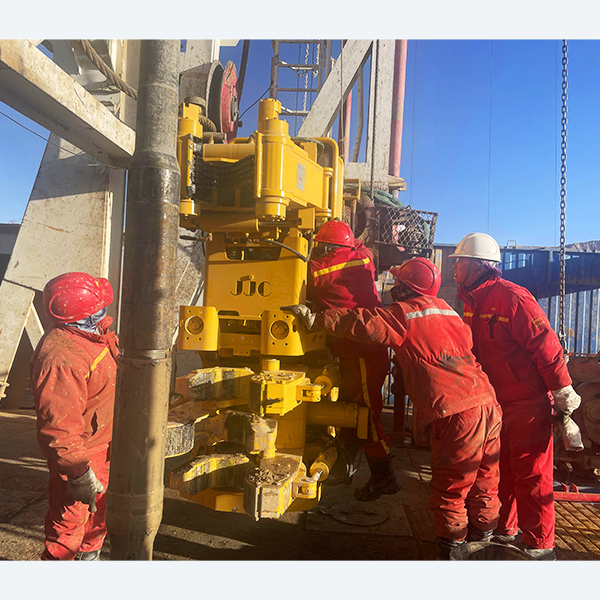
A hydraulic iron roughneck uses hydraulic power for gripping, spinning, and torque. Hydraulic systems are common in drilling because they can deliver strong force in tough conditions.
This type is suitable for heavy-duty rig-floor work. It is often chosen when stable torque and strong gripping force are required.
A compact iron roughneck is designed for rigs with limited floor space. It may suit truck-mounted rigs, trailer-mounted rigs, and smaller drilling rigs.
The value is clear. Operators still get automated make-up and break-out support, but the machine takes up less space. That helps when rig-floor layout is tight.
A rail-type iron roughneck moves along a rail structure. This design can support stable movement and accurate positioning. It may be useful for offshore platforms or rigs that need controlled movement paths.
Rail systems can also make operation more predictable because the tool follows a fixed travel path.
An intelligent iron roughneck adds more automation features. These may include digital control, remote operation, one-button operation, or machine vision options.
Machine vision can help the system recognize tools or pipe positions more intelligently. Cold-weather upgrade options may also be useful in low-temperature regions.
Safety is one of the biggest reasons to use an iron roughneck. It reduces the need for workers to stand close to rotating pipe and high-torque tools.
This helps lower exposure to pinch points, sudden pipe movement, and heavy manual handling. It also supports a more organized rig floor.
An iron roughneck can speed up pipe connection work. The spinner rotates the threads quickly. The torque wrench then completes the final make-up or break-out.
Faster connection work can improve the drilling cycle. It also helps crews keep a steadier workflow during repeated operations.
Torque consistency is critical. Good control helps protect thread life and reduces the risk of poor connections.
In manual work, torque results may vary by operator, tool condition, and working environment. A machine-controlled system improves repeatability.
Rig work is physically demanding. An iron roughneck reduces the need for repeated force-heavy actions. This helps crews work more safely during long shifts.
It also allows workers to focus more on monitoring, coordination, and inspection.
Note:Efficiency gains depend on rig layout, crew training, pipe program, and maintenance condition.
Land rigs often need fast, repeatable pipe handling. An iron roughneck supports this by making and breaking pipe joints in a controlled way.
It can also fit into a wider rig automation system. This helps improve the workflow between the driller, pipe handling equipment, and other rig-floor tools.
Offshore platforms need stable operation and strong safety control. Space may be limited, and environmental conditions can be more demanding.
A rail-type or intelligent design may help in these cases. Accurate positioning and reliable movement become very important offshore.
Workover and service jobs may also need repeated pipe connection work. An iron roughneck can support safer handling during maintenance, intervention, or repair tasks.
For these jobs, easy installation and maintenance are valuable. Crews may need equipment that can adapt to different site conditions.
Some rigs have very limited drill-floor space. Compact iron roughnecks are designed for this problem.
A smaller footprint helps reduce interference. It may also improve operator visibility and allow installation closer to the working area.
Start with the rig. A large land rig, offshore platform, trailer-mounted rig, and truck-mounted rig may all need different designs.
For a small rig, a compact type may be better. For offshore use, a rail-type structure may offer better positioning. For high-end automation, an intelligent arm type may fit better.
Next, review pipe size, connection type, and torque needs. The equipment must handle the expected range of operations.
Do not choose only by machine size. A compact model still needs enough torque and gripping ability for the job. A large model may not fit a tight floor.
Control features affect daily use. Remote control and digital control can make operation easier. One-button functions may reduce repeated manual steps.
For advanced rigs, centralized control compatibility may matter. Optional machine vision can also add value when intelligent recognition is needed.
Maintenance access is easy to overlook. It should not be. Rig-floor equipment works in harsh conditions, so wear parts and service support matter.
Check tong jaws, spinning parts, hydraulic components, sensors, and control modules. Also ask about spare parts supply before final selection.
Tip:A lower purchase price can become costly if parts supply is slow or maintenance access is poor.
JJC TEC provides iron roughneck solutions designed for safer, faster, and more controlled rig-floor work. Its product range supports compact, rail-type, intelligent arm, and deep-well applications, along with digital control, optional machine vision, low-temperature packages, and spare parts service. For drilling teams, it offers practical value through efficiency, safety, and reliable support.
A: An iron roughneck is a rig-floor machine for pipe make-up and break-out work.
A: It grips pipe, spins threads, then applies controlled torque.
A: It improves safety, speed, torque control, and labor efficiency.
A: Cost depends on type, torque range, controls, and service needs.
A: An iron roughneck combines more functions in one automated system.
A: Common issues include worn jaws, hydraulic faults, or poor alignment.